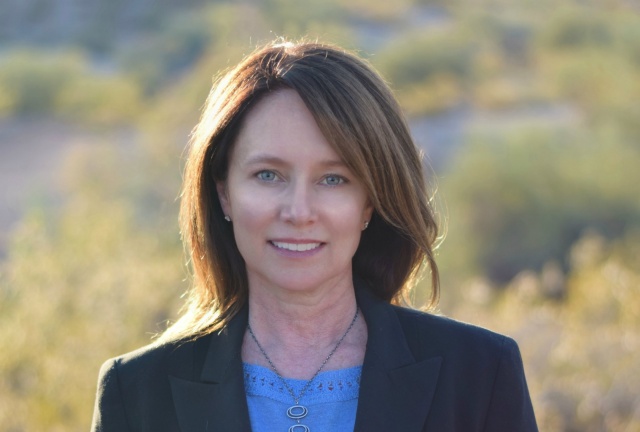
Director Buschatzke addresses legislative panel at “Learning Tour” gathering in Yuma
At a highly anticipated public meeting on water issues in Yuma on Friday, Arizona Department of Water Resources Director Tom Buschatzke told legislators and a packed audience that sound management of Arizona’s Colorado River supplies requires forbidding the operator of the Central Arizona Project canal from using “sovereign immunity” as a legal weapon against folks with Colorado River water entitlements.
“The State has concerns that [the Central Arizona Water Conservation District, operator of the CAP canal] will attempt to use the defense of sovereign immunity at the expense of water users in Arizona,” said Buschatzke. CAWCD has maneuvered, unsuccessfully thus far, to just do that.
“Sovereign immunity” is a legal protection that indemnifies some public entities – such as states and the federal government – from many types of lawsuits. CAWCD has acknowledged that gaining sovereign immunity as a so-called “arm of the State” of Arizona is of “fundamental importance” to the canal operator.
The Director reminded lawmakers that the District has attempted to use the defense in the past, notably in a federal case involving a Colorado River water entitlement holder, the Ak Chin Indian Community.
“To prevent CAWCD from claiming sovereign immunity in the future, the Governor’s Office and DWR proposed legislation that would clarify that CAWCD is not entitled to sovereign immunity in any type of lawsuit,” said Buschatzke.
“I would like to see our proposed legislation move forward this session.”
Buschatzke delivered his remarks at a special “Learning Tour” organized by legislative leaders seeking public input on proposals to reform Arizona water laws.
Organized by Sen. Gail Griffin and Rep. Rusty Bowers — chairmen, respectively, of the Senate and House natural resources committees — the tour already has taken public commentary at a meeting on March 9 in Casa Grande.
In addition to his oral testimony expressing opposition to CAWCD’s pursuit of a “sovereign immunity” legal defense against its own customers, Buschatzke also provided the panel with a more expansive written testimony.
That written statement illustrated the State’s priorities in reforming Arizona water law this year.
Those priorities include taking action to protect Lake Mead from falling to critically low elevation. Among those actions: winning legislative authority to finalize a “Drought Contingency Plan” with Arizona’s Lower Basin Colorado River partners.
A central feature of that plan is giving the ADWR Director authority to “forbear” delivery of Colorado River water conserved by an Arizona Contractor in Lake Mead. That means the Director would assure no other contractor could take that water from the troubled reservoir.
Director Buschatzke’s full statement to the legislative Learning Tour panel in Yuma follows:
Testimony of ADWR Director Tom Buschatzke Before the Special Meeting of the Arizona House Committee on Energy, Environment and Natural Resources
Yuma City Hall, March 23, 2018
My name is Tom Buschatzke. I am the Director of the Arizona Department of Water Resources or DWR.
I know that most of you are familiar with DWR, but for those who are not, it is the agency designated by the Legislature to represent the State of Arizona with the United States, other states, and Mexico on matters involving the Colorado River. The State Legislature and DWR, working with the Governor, are the appropriate entities to represent the State. DWR is also the agency tasked with protecting the State’s rights to Colorado River water.
I take those responsibilities very seriously.
Colorado River water is vital to our State. No one knows that better than the people who live and work in Yuma, where approximately 1 million of Arizona’s 2.8 million acre-feet of Colorado River water is used. Colorado River supplies are becoming increasingly at-risk. Continuous, long-term drought coupled with an over-allocation of Colorado River supplies, the structural deficit, has not only brought Lake Mead to the brink of shortage, it has increased the probability of the Lake dropping to critically low elevations that could affect all Colorado River water users in the State.
The volume of water that Arizona receives every year from the Colorado River is tied to Lake Mead elevations. Once the Lake’s elevation falls below 1,075 feet, Arizona deliveries are reduced by 320,000 acre-feet, approximately 11% of Arizona’s total Colorado River allocation. Deeper, more extensive shortages occur at lower “trigger” elevations. Early shortages will hit water users in Central Arizona, and particularly the CAGRD and the Arizona Water Banking Authority, the hardest. At even lower elevations, draconian reductions will be necessary to protect remaining water supplies in the Lake.
“Continuous, long-term drought, coupled with… the structural deficit, has not only brought Lake Mead to the brink of shortage, it has increased the probability of the Lake dropping to critically low elevations that could affect all Colorado River water users in the State.”
Yuma water contractors hold some of the most senior rights on the River. But even senior rights are at risk when Lake Mead elevations plunge. If Lake Mead reaches deadpool at elevation 895 feet, no water can move past the dam. Picture a bathtub with only an overflow drain. It could have water in the tub that you could not get out of the tub. That is what “deadpool” is.
We anticipate that the Secretary of the Interior will act to avoid the Lake reaching deadpool, but we can’t know how. Modelling projects that waiting to act until the Lake reaches elevation 1020 could result in a 3 to 6 million acre-feet reduction in the Lower Basin. All Arizona Contractors should be concerned about the uncertainty that could result from possible Secretarial intervention.
To address this increasing risk, beginning in 2015 DWR, on behalf of Arizona, began meeting with representatives of California and Nevada, which also receive Colorado River water from Lake Mead, and the federal government to devise ways to keep more water in Lake Mead. That group developed a water management framework designed to do just that, called the Drought Contingency Plan or DCP.
The DCP is not yet in effect. There are still aspects of it which need to be resolved, and ultimately, the Legislature must approve it. But the core commitments embodied in the DCP are historically remarkable in many ways. The plan contains a collective commitment on behalf of the Lower Basin states to protect against Lake elevations falling below elevation 1020. It would require California, for the first time, to participate in mandatory shortage reductions. It also contains additional efforts by Nevada to conserve water in Lake Mead, and through its connection to Minute 323 to the Mexico Water Treaty, would require additional water savings from Mexico.
In order to receive these benefits, Arizona must be willing to give something as well. The DCP contemplates that Arizona will begin taking shortages at higher Lake elevations, Specifically, Arizona would be required to leave 192,000 acre-feet in Lake Mead at elevation 1090.
Impacts of that additional reduction will be partially mitigated when Lake Mead is kept above elevation 1075 by keeping CAP agriculture’s water supply whole. Incentives included in the DCP for conservation by Nevada, California, and Mexico are expected to help achieve that goal. But Arizona must also act to conserve water in Lake Mead to achieve that goal. Those actions by Arizona are known as DCP Plus.
In June of 2017, the Governor’s Office convened a group of stakeholders to deliver support for DCP and to find a way to make DCP Plus work. During that process, the Governor’s Office and DWR proposed a program to facilitate conservation efforts by Arizona Colorado River Contractors to target maintaining Lake elevations at or around 1,080 feet. The proposed program would facilitate conservation in several ways, one of which is to ensure that water that is kept or stored in Lake Mead by an Arizona Contractor would not be taken out by another Arizona water user. This last feature is achieved by giving the ADWR Director authority to “forbear” delivery of the water to other water users.
The Governor’s proposal has met with resistance. One the most vocal opponents has been CAWCD.
CAWCD is resisting efforts for all Colorado River water contractors to create conserved water, and in the process has sought to exercise an outsized role in shaping Arizona’s Colorado River water policy.
For example, Arizona Indian tribes have rights to nearly half of all the Colorado River water delivered through the CAP canal. At least one of those tribes, the Gila River Indian Community, is already leaving water in the Lake to help prop up Lake elevations. Tribes are interested in conserving additional water in Lake Mead through the creation of something known as Intentionally Created Surplus. Both the U.S. and the State of Arizona agree that they have the legal right to create ICS. However, to date, CAWCD refuses to recognize that right. We need all hands on deck within the State of Arizona.
“CAWCD is resisting efforts for all Colorado River water contractors to create conserved water, and in the process has sought to exercise an outsized role in shaping Arizona’s Colorado River water policy.”
With respect to DWR and the Governor’s Conservation Program proposal, CAWCD has asserted that it should have veto authority in all decisions about who in Arizona can conserve water and under what conditions.
CAWCD is governed by elected officials from Maricopa, Pima, and Pinal counties, yet they make decisions affecting all of Arizona. Several actions taken by CAWCD over the past few years demonstrate that CAWCD gives little thought to the broader statewide impacts of its actions.
I will give two specific examples, though there are more:
In 2014, the CAWCD entered into an agreement with the Metropolitan Water District of Southern California, the Southern Nevada Water Authority, and Denver Water for a pilot program to fund the creation of Colorado River system water through voluntary water conservation. Water that was left in Lake Mead pursuant to that agreement has been important in avoiding shortage, and no one seeks to deny or minimize that fact. However, that agreement was negotiated without the involvement of DWR, and contains at least one provision that should cause concern throughout the State of Arizona.
The pilot agreement recognizes conservation through reductions in the “consumptive use” of Colorado River water; however, rather than defining consumptive uses with reference to the “Colorado River mainstream,” as it was defined in U.S. Supreme Court’s Decree in the landmark case of Arizona v. California, the pilot agreement allows for the creation of system water through reductions to consumptive uses of water from the “Colorado River System,” including “water drawn from the Colorado River System by underground pumping.” The term “Colorado River System,” is defined in the pilot agreement to have the same meaning as in the 1922 Interstate Compact among the seven Basin States, which included not only the Colorado River mainstream in its definition, but also all of its tributaries.
We vigorously disagree with this reckless definition of “consumptive use.” It flies in the face of the landmark Supreme Court decision, Arizona v. California and the Boulder Canyon Project Act of 1928. The literal reading of this language suggests that all wells used by agriculture, industry, mining, cities, towns, and counties connected to water that is tributary to the Colorado River might be pumping Colorado River System water. If that were the case, all of those wells would need a contract with the Secretary of the Interior and those withdrawals would count against Arizona allocation of 2.8 million acre-feet. It appears that CAWCD gave no thought to the potential impacts of this language on water users across the State.
CAWCD’s disregard of the impacts of actions to other water users is also evidenced in its relentless efforts to claim sovereign immunity under the Eleventh Amendment of the U.S. Constitution. Under the Eleventh Amendment, states cannot be sued in federal court with certain exceptions. Political subdivisions of the state, like CAWCD, generally are not entitled to claim this immunity.
CAWCD nevertheless raised the defense in 2012 in an employment case filed in federal district court known as the Gressett case. CAWCD argued that it should be entitled to sovereign immunity because it is an “arm of the State.” The district court rejected that argument.
CAWCD appealed the ruling and, in an effort to convince the Ninth Circuit Court of Appeals that it is an arm of the State, it made inaccurate claims about its authority and responsibility in securing and managing Colorado River water. CAWCD also argued that the State of Arizona would be functionally liable for CAWCD’s debts if CAWCD were unable to meet them.
In fact, CAWCD was established to ensure that the cost of repayment of the State’s share of the construction of the Central Arizona Project would be borne by water users and tax payers in the three counties that benefit from CAP water deliveries, and not by the taxpayers in Arizona’s 12 remaining counties, who rely on other water supplies.
The State has concerns that CAWCD will attempt to use the defense of sovereign immunity at the expense of water users in Arizona. And in fact, CAWCD raised the defense in a case brought by the Ak-Chin Indian Community regarding the Community’s rights to the delivery of Colorado River water. The State of Arizona opposed CAWCD’s attempts to obtain a court ruling that it has sovereign immunity. CAWCD settled that case before the Ninth Circuit ruled on it.
CAWCD testified to the Legislature in early February that sovereign immunity is limited, and that it would not be used in contractual disputes. However, on February 26, 2018, CAWCD requested the court vacate its decision so that it can raise the defense of sovereign immunity in future lawsuits. CAWCD said that sovereign immunity is of “fundamental importance” to it. The State opposed this action as well.
The State is seeking a permanent resolution to this issue. To prevent CAWCD from claiming sovereign immunity in the future, the Governor’s Office and DWR have proposed legislation that would clarify that CAWCD is not entitled to sovereign immunity in any type of lawsuit. But that legislation appears nowhere in any bill. We are committed to protecting Colorado River water users in Yuma, La Paz, and Mohave counties, as well as those water users within CAWCD’s service area.
I would like to see our proposed legislation move forward this session.