The current status of Colorado River negotiations: A statement from the seven Colorado River Basin States, the Department of the Interior and the Bureau of Reclamation

PRESS STATEMENT

The current status of Colorado River negotiations: A statement from the seven Colorado River Basin States, the Department of the Interior and the Bureau of Reclamation

The seven Colorado River Basin states together with the Department of the Interior and the Bureau of Reclamation recognize the serious and ongoing challenges facing the Colorado River. Prolonged drought and low reservoir conditions have placed extraordinary pressure on this critical water resource that supports 40 million people, tribal nations, agriculture, and industry.  

While more work needs to be done, collective progress has been made that warrants continued efforts to define and approve details for a finalized agreement. Through continued cooperation and coordinated action, there is a shared commitment to ensuring the long-term sustainability and resilience of the Colorado River system.

###

ADWR CELEBRATES NEW, “ALTERNATIVE” ASSURED WATER SUPPLY PATHWAY

PHOENIX – Today Governor Katie Hobbs signed a proclamation celebrating the first implementation of the new “Alternative Designation of Assured Water Supply Program,” commemorating a new pathway for increasing Arizona’s housing supply while at the same time maintaining the vital consumer protections of the State’s landmark Groundwater Management Act.

“This program, dubbed ADAWS, represents the culmination of a challenging public stakeholder process that kept protection of Arizona’s groundwater supplies as a top priority,” said Arizona Department of Water Resources Director Tom Buschatzke.

“I commend Governor Hobbs for her leadership in this effort, and I further commend my hard-working staff for the countless hours they have contributed to making this alternative pathway to an Assured Water Supply a reality for participating providers.”

“The many stakeholders involved in this process have been intensely engaged and determined to find that next adaptation of water policy that allowed incremental, sustainable growth while protecting groundwater. I heartily commend them as well.”

__

See: EPCOR Water Arizona-West Valley System AWS Designation

###

PUBLIC COMMENT PERIOD FOR ARIZONA WATER PROTECTION FUND FISCAL YEAR 2026 GRANT APPLICATIONS NOW OPEN

Arizona Water Protection Fund

PRESS RELEASE

FOR IMMEDIATE RELEASE                                                         August 29, 2025

PUBLIC COMMENT PERIOD FOR ARIZONA WATER PROTECTION FUND FISCAL YEAR 2026 GRANT APPLICATIONS NOW OPEN

PHOENIX – The Arizona Water Protection Fund* has received grant applications for its fiscal year 2026 funding cycle.

Grant applications are now available for public review at the Arizona Water Protection Fund website at https://www.azwpf.gov/grant-information/fy-2026-grant-cycle or at the Arizona Department of Water Resources physical address described below.

Written comments regarding grant applications may be submitted during the 45-day public comment period, which begins September 2, 2025 and ends October 17, 2025 at 5:00 p.m. Written public comments must be received no later than 5:00 p.m., October 17, 2025. Written comments can be mailed, sent via email, or sent by fax. If mailed, written comments must be postmarked no later than October 17, 2025. Please include application numbers and project titles. For additional information, please contact Reuben Teran, Executive Director, at (602) 771-8528.

MAILING ADDRESSPHYSICAL ADDRESS
Arizona Department of Water Resources
Arizona Water Protection Fund
Attn: Reuben Teran
1802 W Jackson St. Box #79
Phoenix, Arizona 85007
Arizona Department of Water Resources
Arizona Water Protection Fund
1110 West Washington, Suite 310
Phoenix, Arizona 85007
FAXEMAIL
(602) 771 -8687rteran@azwater.gov

* The Arizona Water Protection Fund supports projects that develop or implement on the ground measures that maintain, enhance and restore Arizona’s river and riparian resources.

###

ARIZONA WATER PROTECTION FUND ACCEPTING APPLICATIONS FOR FISCAL YEAR 2026 GRANT CYCLE

Arizona Water Protection Fund

PRESS RELEASE

FOR IMMEDIATE RELEASE                                                         May 14, 2025

ARIZONA WATER PROTECTION FUND ACCEPTING APPLICATIONS FOR FISCAL YEAR 2026 GRANT CYCLE

PHOENIX- The Arizona Water Protection Fund (AWPF) supports projects that develop or implement on-the-ground measures that directly maintain, enhance and restore Arizona’s river and riparian resources.

The AWPF Commission will be accepting applications for the Fiscal Year 2026 grant cycle and will award grants under three categories: capital projects, research, and water conservation. The deadline to submit applications is Friday, August 15, 2025, at 11:59 p.m. Arizona time. Applications will only be accepted electronically via the eCivis Grants Management System. The eCivis grant application portal link, grant cycle schedule, grant application manual, and electronic forms are available on the AWPF website at https://www.azwpf.gov/grant-information/fy-2026-grant-cycle.

AWPF staff will be hosting one grant application workshop:

Location: Online Webinar*

Date: Wenesday, June 11, 2025

Time: 1:30 p.m. – 2:30 p.m.

Webinar Information:

Link: https://azwater.webex.com/azwater/j.php?MTID=m24989c585e1c6304ec947d328a68bd00
Webinar Number (Access Code): 2531 065 3328
Webinar Password: nAPr9inAY82
Join by Phone: 1-415-655-0001 US Toll (Access Code is same as above)

*Staff will be providing the grant application workshop via online webinar only, but a recording will also be available on the AWPF website at https://www.azwpf.gov/grant-information/fy-2026-grant-cycle. Please contact the Arizona Water Protection Fund at 602-771-8528 or rteran@azwater.gov with any questions.

The Arizona Legislature established the AWPF in 1994 (A.R.S. § 45-2101, et seq.). The Arizona Department of Water Resources provides administrative, technical, and legal support to the AWPF Commission. The legislation establishing the AWPF provides that it is the declared policy of the Legislature to provide for a coordinated effort between state funding and locally led solutions for the restoration and conservation of the water resources of the state. A.R.S. § 45-2101(A). The primary purpose of the AWPF is to provide monies through a competitive public grant process for implementation of measures to protect water of sufficient quality and quantity to maintain, enhance, and restore rivers and streams and associated riparian resources consistent with existing water law and water rights, and measures to increase water availability.
A.R.S. § 45-2101(B).

For additional information, please contact Reuben Teran at rteran@azwater.gov.

###

Water Awareness Month Festival Scheduled for April 5 is Canceled

Color Logo Transparent- For Web

PRESS RELEASE

FOR IMMEDIATE RELEASE                                                         March 26, 2025

Water Awareness Month Festival Scheduled for April 5 is Canceled

PHOENIX (March 26, 2025) – The annual Water Awareness Month Festival sponsored jointly by the Arizona Department of Water Resources (ADWR) and the Arizona Department of Environmental Quality (ADEQ) and scheduled this year at Wesley Bolin Plaza in Phoenix on Saturday, April 5, has been canceled.

Organizers of a nationwide protest event planned for that same day at the State Capitol have informed our agencies that they anticipate substantial attendance that may overflow onto the Plaza area. Out of an abundance of caution, ADWR and ADEQ have opted to cancel this year’s festival.

_

For further information, contact:

ADWR: Shauna Evans, Public Information Officer | 602-771-8079 | smevans@azwater.gov

ADEQ: Alma Suarez, Deputy Public Information Officer for Water Quality | 480-670-0568 | suarez.alma@azdeq.gov

###

ADWR Director expresses support for reintroduction of historic tribal water rights settlement

Color Logo Transparent- For Web

PRESS RELEASE

FOR IMMEDIATE RELEASE                                                         March 12, 2025

CONTACT: Doug MacEachern

PHONE: 602.771.8507

ADWR Director expresses support for reintroduction of historic tribal water rights settlement

Phoenix, AZ — Members of Arizona’s Congressional delegation from both sides of the aisle have led the way in reintroducing legislation to ratify and fund the historic Northeastern Arizona Indian Water Rights Settlement Agreement.

Arizona Senators Mark Kelly and Ruben Gallego, alongside Representatives Juan Ciscomani (R-AZ-06), Greg Stanton (D-AZ-04), David Schweikert (R-AZ-01), Raúl Grijalva (D-AZ-07) and Yassamin Ansari (D-AZ-03) announced on Tuesday the reintroduction of the vital legislation.

The bill was originally introduced in Congress last year to ratify and fund the settlement agreement entered into between the State of Arizona, the Navajo Nation, the Hopi Tribe, the San Juan Southern Paiute Tribe, and numerous other Arizona parties.

Arizona Governor Katie Hobbs signed the settlement agreement on November 19, 2024.

“Arizona’s congressional delegation is to be commended for leading the way in moving this legislation forward,” said Arizona Department of Water Resources Director Tom Buschatzke.

“Finalizing this crucial agreement, following decades of negotiation in some cases, constitutes a monumental ‘win’ for both the State of Arizona and the tribes,” said Buschatzke. “So, it is extremely gratifying to see our representatives from both sides of the political divide uniting behind this legislation.”

Congressional approval of the Act is vital to assuring clean and safe water supplies for the three Native American tribes.  Although estimates vary across the Navajo Nation, Hopi Tribe, and San Juan Southern Paiute Tribe reservations, approximately one-third of homes on the three reservations lack access to running water.

The legislation creates a reservation for the San Juan Southern Paiute Tribe, settles the Arizona water rights claims for all three Tribes, and authorizes $5.1 billion to acquire, build, and maintain much needed delivery infrastructure and water development projects, including the iiná bá – paa tuwaqat’si pipeline that will bring Colorado River water to the three reservations. Settlement water supplies include both Upper and Lower Basin Colorado River water, groundwater, and other surface water supplies.

The settlement also allows the Navajo Nation and the Hopi Tribe to lease a portion of their Colorado River supplies off-reservation, creating economic opportunities until on-reservation demand is met through new infrastructure.

The leasing authorization includes authorization to lease the Tribes’ Upper Basin Colorado River water for system conservation, which will provide a benefit to the Colorado River System.  The water has historically been used for system conservation.

For further information, contact ADWR communications administrator Doug MacEachern at dmaceachern@azwater.gov or 602.771.8507.

###

ARIZONA DEPARTMENT OF WATER RESOURCES FIELD HYDROLOGISTS CONDUCTING “BASIN SWEEP” TO COLLECT WATER LEVEL MEASUREMENTS IN TUCSON/SANTA CRUZ AMAS

PHOENIX- Beginning the week of March 3, 2025, and continuing through April 2025, Arizona Department of Water Resources (ADWR) field services staff will make an extensive effort to measure water levels in wells within several groundwater basins in Southern Arizona. This survey of wells – or basin “sweep”, as it is known, was last conducted during the Spring of 2020.

The data collected will be analyzed and used to obtain a comprehensive overview of the groundwater conditions and used to support scientific and water management planning efforts. Among others, data uses will include:

  • Analysis of water-level trends
  • Groundwater modeling
  • Water-level change maps
  • Hydrologic reports
  • Water resource planning and management

The groundwater subbasins that will be targeted are as follows; Avra Valley, Cienega Creek, San Rafael, Santa Cruz AMA and Upper Santa Cruz. These subbasins cover several thousand square miles of Tucson Metro, farmland, riparian areas, Santa Cruz River and rugged terrain in Southern Arizona along the border of Mexico. Additional coverage areas include the cities and towns of Green Valley, Tubac, Nogales, Patagonia and Sonoita.

For more information regarding this matter, please contact Public Information Officer Shauna Evans at smevans@azwater.gov or (602) 771-8079.

Details about the nature of basin sweeps and groundwater modeling can be found here. If you would like to volunteer your well for participation in this groundwater survey please contact the Hydrology Division at (602) 771-8535.

###

ARIZONA WATER PROTECTION FUND WELCOMES NEW TRIBAL APPOINTMENT

Arizona Water Protection Fund

PRESS RELEASE

FOR IMMEDIATE RELEASE                                                         March 4, 2025

ARIZONA WATER PROTECTION FUND WELCOMES NEW TRIBAL APPOINTMENT

Phoenix, AZ — The Arizona Water Protection Fund Commission (Commission) is proud to announce that Rolando Flores, councilmember of the Pascua Yaqui Tribe, has been appointed to the Commission by the Inter Tribal Council of Arizona on February 21.

In a letter announcing the appointment of Mr. Flores, Inter Tribal Council President Paul J. Russell observed that “Mr. Flores will bring valuable insights and contributions to the Commission, helping to further its mission of protecting and enhancing Arizona’s water resources for future generations.”

The Water Protection Fund is a competitive State grant program that provides funding for the development and implementation of measures to protect water of sufficient quality and quantity to maintain, enhance and restore rivers, streams and riparian habitat, including projects that benefit fish and wildlife that are dependent on these important resources.

Commission members are appointed for three-year terms. They may serve more than one term and may continue to serve beyond the expiration of the term until a successor is appointed and assumes office.

According to State statute, the Commission should include “(o)ne person who represents an Indian tribe and who is appointed by the chairman of the Inter Tribal Council of Arizona.”

Water Protection Fund Commission Chairman Pat Jacobs said that “we welcome Mr. Flores for his perspective and understanding of surface-water issues.”

He observed that Arizona’s tribal community “has been without a representative in that position on the Commission for a long time,” and thanked the Inter Tribal Council of Arizona “for appointing a highly qualified representative.”

Mr. Jacobs noted having a Commission member who is representative of tribal perspectives, as well as someone with Mr. Flores’ extensive understanding of surface-water issues, “is vitally important.”

Mr. Flores, an attorney and graduate of the University of Arizona College of Law, has previously served as Attorney General of the Pasqua Yaqui Tribe.

Currently, he is the co-chair for the Economic Development Oversight Committee of the Tribe. He is also the Vice Chairman of the Arizona Indian Gaming Association.

For further information about the Water Protection Fund, or for information about upcoming WPF Commission meetings, visit http://www.azwpf.gov contact WPF staff at Phone: (602) 771-8528.

###

Arizona Governor Hobbs proposes adding over $60 million to defend State’s water future

Color Logo Transparent- For Web

PRESS RELEASE

FOR IMMEDIATE RELEASE                                                         January 30, 2025

CONTACT: Doug MacEachern

PHONE: 602.771.8507

ARIZONA GOVERNOR HOBBS PROPOSES ADDING OVER $60 MILLION TO DEFEND STATE’S WATER FUTURE

A breakdown of water-related investments included in the recently released Executive Budget proposal from Arizona Governor Katie Hobbs:

  • $14.6M Deposit to WIFA Water Conservation Grant Fund

Governor Hobbs has now allocated $14.6 million to the Water Conservation Grant Fund to enable the Water Infrastructure Finance Authority (WIFA) to continue investing in generational water conservation projects.

Thanks to $200 million awarded by the State in federal funds allocated through the American Rescue Plan Act, WIFA has been able to fund conservation-focused projects across Arizona. To date, WIFA has funded over 150 water conservation projects. The Governor’s 2025 Executive Budget proposal includes investments in current and future water solutions, including WIFA’s funding for rural water supply development and long-term augmentation.

These critical resources will help ensure that rural areas can invest in the infrastructure they need to be water resilient, statewide efforts continue their investment in the infrastructure Arizona needs to find sustainable, renewable water supplies for the future. These investments speak directly to the mission of WIFA, which has been to augment and expand Arizona’s water supplies.

  • $12M Grant for City of Buckeye Renewable Water Infrastructure

By enrolling in the new Alternative Designation of 100-year Assured Water Supply (ADAWS) Program, the City of Buckeye has committed to increasing the sustainability of its water resource portfolio, a major step forward toward creating sustainable growth. This allocation of $12 million will help Buckeye build infrastructure to reuse its effluent supplies and recover them from a hydrologically connected area; facilitating sustainable growth and increased use of renewable water supplies.

  • $7M Statewide Groundwater Monitoring and Data Collection

These allocations will provide ADWR with much needed additional tools to  ensure that Arizona’s groundwater resources are properly managed and protected. Governor Hobbs has invested $7 million to ADWR to install groundwater monitoring index wells throughout rural Arizona to observe declining groundwater levels and inform ongoing groundwater protection efforts. Without these index wells, ADWR hydrologists are less able to accurately assess the health of groundwater supplies in rural areas.

  • $5.5M For ADWR Hydrogeologic Studies in Priority Groundwater Basins

To help rural communities understand and protect their groundwater supplies, ADWR hydrologists create groundwater models that help water managers and community leaders understand the conditions of their aquifers. This $5.5 million investment will allow ADWR hydrogeologists to collect key hydrogeologic information to build these critical models in groundwater basins experiencing severe water declines.

  • $3.45M ADWR Leading Edge Satellite Water Monitoring Systems & Equipment

This investment with ADWR funds the acquisition and use of cutting-edge technologies including absolute gravity survey equipment to monitor aquifer conditions, funding for the Arizona Continuously Operating Reference Stations (AZCORS) Network that provides critical GPS data for scientists, engineers, and surveyors throughout Arizona. It provides funds for satellite monitoring of statewide water demand, and funding for ADWR contractual partnerships with the US Geological Survey (USGS) to collect key water use data.

###

Governor’s Executive Budget Proposal Includes Funding for Key ADWR Initiatives

Color Logo Transparent- For Web

PRESS RELEASE

FOR IMMEDIATE RELEASE                                                         January 17, 2025

CONTACT: Doug MacEachern

PHONE: 602.771.8507

GOVERNOR’S EXECUTIVE BUDGET PROPOSAL INCLUDES FUNDING FOR KEY ADWR INITIATIVES

Funding for Arizona’s on-going efforts to protect groundwater resources and to prepare for possible litigation over management of the Colorado River

Phoenix, AZ — Today Governor Hobbs released her FY2026 Executive Budget, which funds critical ADWR programs and efforts, including our expanding efforts to actively manage groundwater resources in previously unregulated areas of rural Arizona and to prepare for the possibility of litigation to defend the State’s Colorado River allocation.

While managing current endeavors, ADWR has taken on the State’s next generation of water challenges.

Those new challenges include:

  • Assisting an increasing number of Arizonans in rural communities who now have groundwater protections for the first time ever.
  • Helping builders to find a new path to build more homes in Arizona’s urban centers while reducing reliance on groundwater.
  • Partnering with Tribes whose efforts to reach agreement on water rights are now bearing fruit as a result of successful negotiations with the State and local parties.

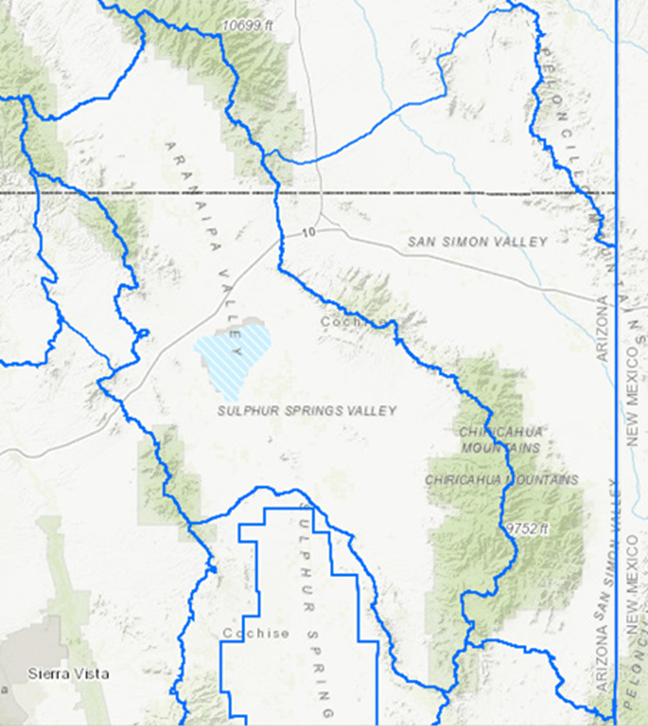
Decades of drought in the Southwest, as well as significant increases in groundwater mining in recent years in rural areas, have prompted the ADWR Director to take action, including designating earlier this year Arizona’s seventh Active Management Area (AMA) in the Willcox Basin region.

The new Willcox AMA, along with the Douglas AMA established in 2022 in southern Arizona, together represent the first-ever expansions of groundwater basins actively managed by the Department since the enactment of Arizona’s landmark Groundwater Management Act of 1980.

As a result, ADWR is preparing to advance its efforts to monitor commercial groundwater extraction, assist local communities in establishing groundwater-protection goals and assure that new-home construction in the new Willcox AMA conforms to the requirements of the Groundwater Management Act, including assuring new-home buyers of at least a 100-year water supply.

To keep up with this work on behalf of Arizonans, ADWR must strengthen its team of highly skilled, technical professionals. The Executive Budget includes an ongoing General Fund appropriation of $741,300 to add 6.0 FTE positions across the agency to meet the demanding water policy challenges facing Arizona.

Governor Hobbs’ budget proposal also includes funding to protect the State’s vital Colorado River supplies in the event negotiations on new operating rules for the river falter, prompting legal action.

The Executive Budget creates a Colorado River Litigation Fund with a $1 million General Fund deposit and a transfer of $2 million from prior non-lapsing special line items for Colorado River legal expenses, for a total investment of $3 million.

“If the collaborative and cooperative partnership we have fostered in these negotiations does not bear fruit, Arizona may need to take legal action to protect its current 2.8 million acre feet of Colorado River entitlement,” said Director Tom Buschatzke.

“Litigation is not a path we wish to go down. It can be a very lengthy and expensive process.”

“Nevertheless, this proposed budget demonstrates a significant commitment by Governor Hobbs to support Arizona’s commitment to protecting its entitlement from the Colorado River,” he said.

The current guidelines for the operation and management of the Colorado River system expire at the end of calendar year 2026. Arizona and the six other Basin States are negotiating the post-2026 guidelines with the federal Bureau of Reclamation in order to develop a framework that more sustainably manages the Colorado River system.

The Director of ADWR serves as Arizona’s lead negotiator and is charged with protecting the State’s 2.8 million acre-feet entitlement of Colorado River water, representing as much as 40 percent of the State’s water supply.

While Arizona is committed to collaboration and cooperation with its Basin States partners, it is possible that new guidelines or the absence of a negotiated outcome could result in litigation among the Basin States.

Arizona continues to pursue good-faith negotiations that hopefully will result in a consensus outcome for more sustainable Colorado River management. At the same time, this appropriation ensures that ADWR has the resources to defend Arizona’s interests and water users who depend on the State’s precious Colorado River entitlement.

Major ADWR initiatives funded in the Governor’s budget proposal include:

  • $741,300 ongoing from the General Fund to add 6.0 FTE positions across the agency.
  • $1 million General Fund deposit and a transfer of $2 million from prior non-lapsing special line items for Colorado River legal expenses, for a total investment of $3 million.

###