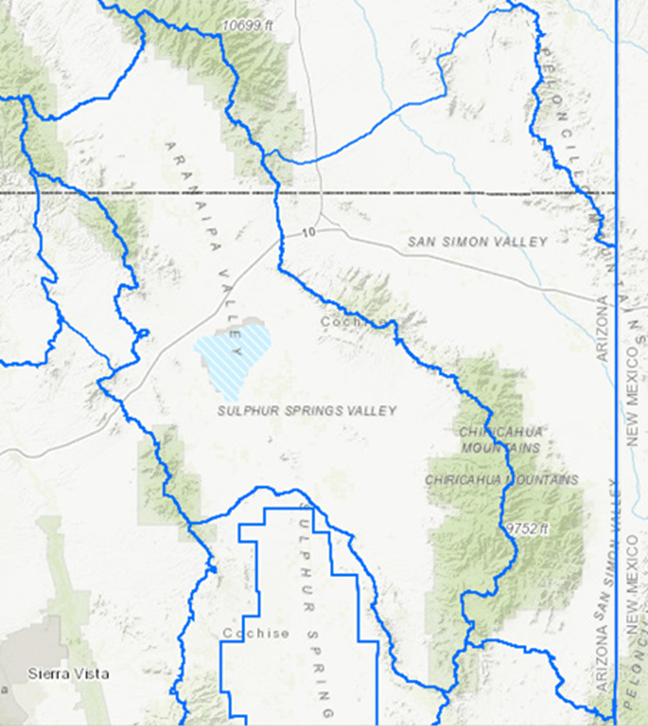
Arizona Department of Water Resources field hydrologists conducting “basin sweep” to collect water level measurements in the Willcox, Douglas, San Bernardino Valley and San Simon Basins

PHOENIX- Beginning the week of January 12th, 2026, and continuing for several months, Arizona Department of Water Resources (ADWR) field services staff will be making an extensive effort to measure water levels in wells in the Willcox, Douglas, San Bernardino Valley and San Simon Basins.  ADWR staff will attempt to measure water levels at hundreds of wells in these groundwater basins.  This survey of wells – or “basin sweep,” as it is known — will be the first such basin survey of the area since 2021.

The data collected will be analyzed and used to obtain a comprehensive overview of the groundwater conditions and used to support scientific and water management planning efforts. Data collected will be used for several purposes, including:

  • Analysis of water-level trends
  • Groundwater modeling
  • Water-level change maps
  • Hydrologic reports
  • Water resource planning and management

The general area covered by this basin sweep is the southeastern portion of the state and extends from the U.S. – Mexico border to north of Willcox, Bowie and San Simon. 
For more information regarding this matter, please contact Public Information Officer Shauna Evans at smevans@azwater.gov or (602) 771-8079.

Details about the nature of basin sweeps and groundwater modeling can be found here. If you would like to volunteer your well for participation in this groundwater survey please contact the Hydrology Division at (602) 771-8535.

###

ADWR CELEBRATES NEW, “ALTERNATIVE” ASSURED WATER SUPPLY PATHWAY

PHOENIX – Today Governor Katie Hobbs signed a proclamation celebrating the first implementation of the new “Alternative Designation of Assured Water Supply Program,” commemorating a new pathway for increasing Arizona’s housing supply while at the same time maintaining the vital consumer protections of the State’s landmark Groundwater Management Act.

“This program, dubbed ADAWS, represents the culmination of a challenging public stakeholder process that kept protection of Arizona’s groundwater supplies as a top priority,” said Arizona Department of Water Resources Director Tom Buschatzke.

“I commend Governor Hobbs for her leadership in this effort, and I further commend my hard-working staff for the countless hours they have contributed to making this alternative pathway to an Assured Water Supply a reality for participating providers.”

“The many stakeholders involved in this process have been intensely engaged and determined to find that next adaptation of water policy that allowed incremental, sustainable growth while protecting groundwater. I heartily commend them as well.”

__

See: EPCOR Water Arizona-West Valley System AWS Designation

###

ARIZONA DEPARTMENT OF WATER RESOURCES FIELD HYDROLOGISTS CONDUCTING “BASIN SWEEP” TO COLLECT WATER LEVEL MEASUREMENTS IN TUCSON/SANTA CRUZ AMAS

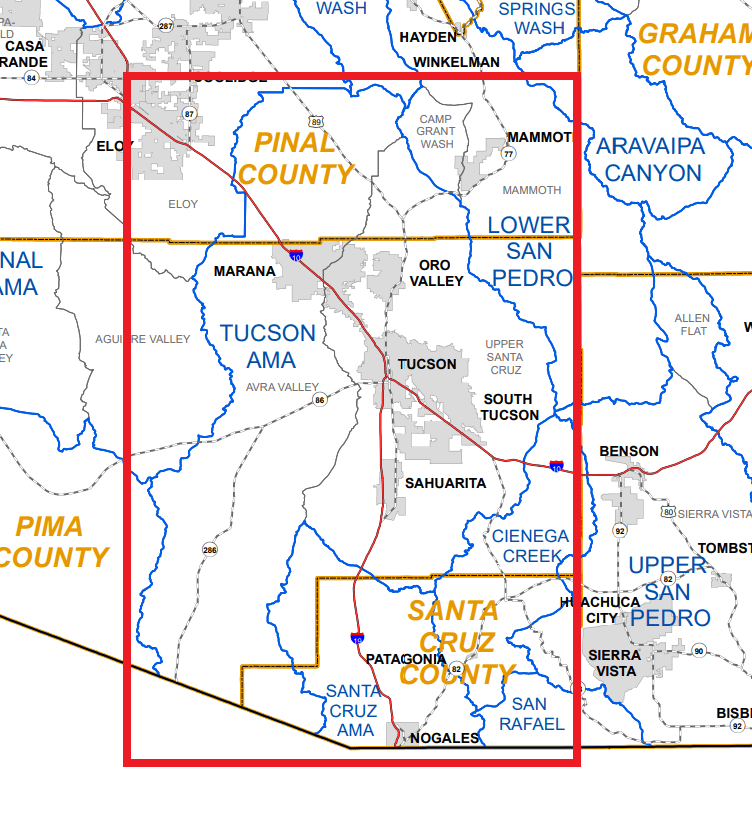
PHOENIX- Beginning the week of March 3, 2025, and continuing through April 2025, Arizona Department of Water Resources (ADWR) field services staff will make an extensive effort to measure water levels in wells within several groundwater basins in Southern Arizona. This survey of wells – or basin “sweep”, as it is known, was last conducted during the Spring of 2020.

The data collected will be analyzed and used to obtain a comprehensive overview of the groundwater conditions and used to support scientific and water management planning efforts. Among others, data uses will include:

  • Analysis of water-level trends
  • Groundwater modeling
  • Water-level change maps
  • Hydrologic reports
  • Water resource planning and management

The groundwater subbasins that will be targeted are as follows; Avra Valley, Cienega Creek, San Rafael, Santa Cruz AMA and Upper Santa Cruz. These subbasins cover several thousand square miles of Tucson Metro, farmland, riparian areas, Santa Cruz River and rugged terrain in Southern Arizona along the border of Mexico. Additional coverage areas include the cities and towns of Green Valley, Tubac, Nogales, Patagonia and Sonoita.

For more information regarding this matter, please contact Public Information Officer Shauna Evans at smevans@azwater.gov or (602) 771-8079.

Details about the nature of basin sweeps and groundwater modeling can be found here. If you would like to volunteer your well for participation in this groundwater survey please contact the Hydrology Division at (602) 771-8535.

###
Press Release: Arizona Department of Water Resources Accepting Applications for the Groundwater Conservation Grant

Color Logo Transparent- For Web

PRESS RELEASE

FOR IMMEDIATE RELEASE                                                   CONTACT: Shauna Evans

Dec. 2, 2019                                                                                          PHONE: 602.771.8079


Arizona Department of Water Resources Accepting Applications for the Groundwater Conservation Grant

PHOENIX- The Arizona Department of Water Resources (ADWR) is now accepting applications for the Water Management Assistance Program (WMAP) Groundwater Conservation Grant. This grant, in the sum of $2,000,000, was appropriated to the WMAP for the purpose of providing additional monies to support conservation of groundwater in Arizona’s five Active Management Areas (AMAs), pursuant to A.R.S. § 45-617 (C). Grants may be allocated to programs and projects that demonstrate the ability to conserve Arizona’s groundwater resources either directly or indirectly and are located within the five AMAs.

The deadline to submit applications is February 14, 2020, by 5 pm.

Application solicitation and the Grant Notice of Funding Opportunity may be found on the Arizona Office of Grants and Federal Resources website: https://grants.az.gov/funding-opportunities-0. Applications must be submitted through this website in order to be considered.

ADWR staff will host a grant application workshop on Tuesday, December 10th at 8:30–10:00 am at ADWR, 1110 W. Washington St., Room 3175, Phoenix, 85007. The workshop will be available via webinar as well as recorded and posted on the WMAP webpage at https://new.azwater.gov/ama/wmap, for those who are not able to attend the workshop.

For additional information, please contact Melissa Sikes, WMAP Coordinator, at (602) 771-8449 or msikes@azwater.gov.

###

ADWR completes groundwater flow model update of North Santa Cruz AMA

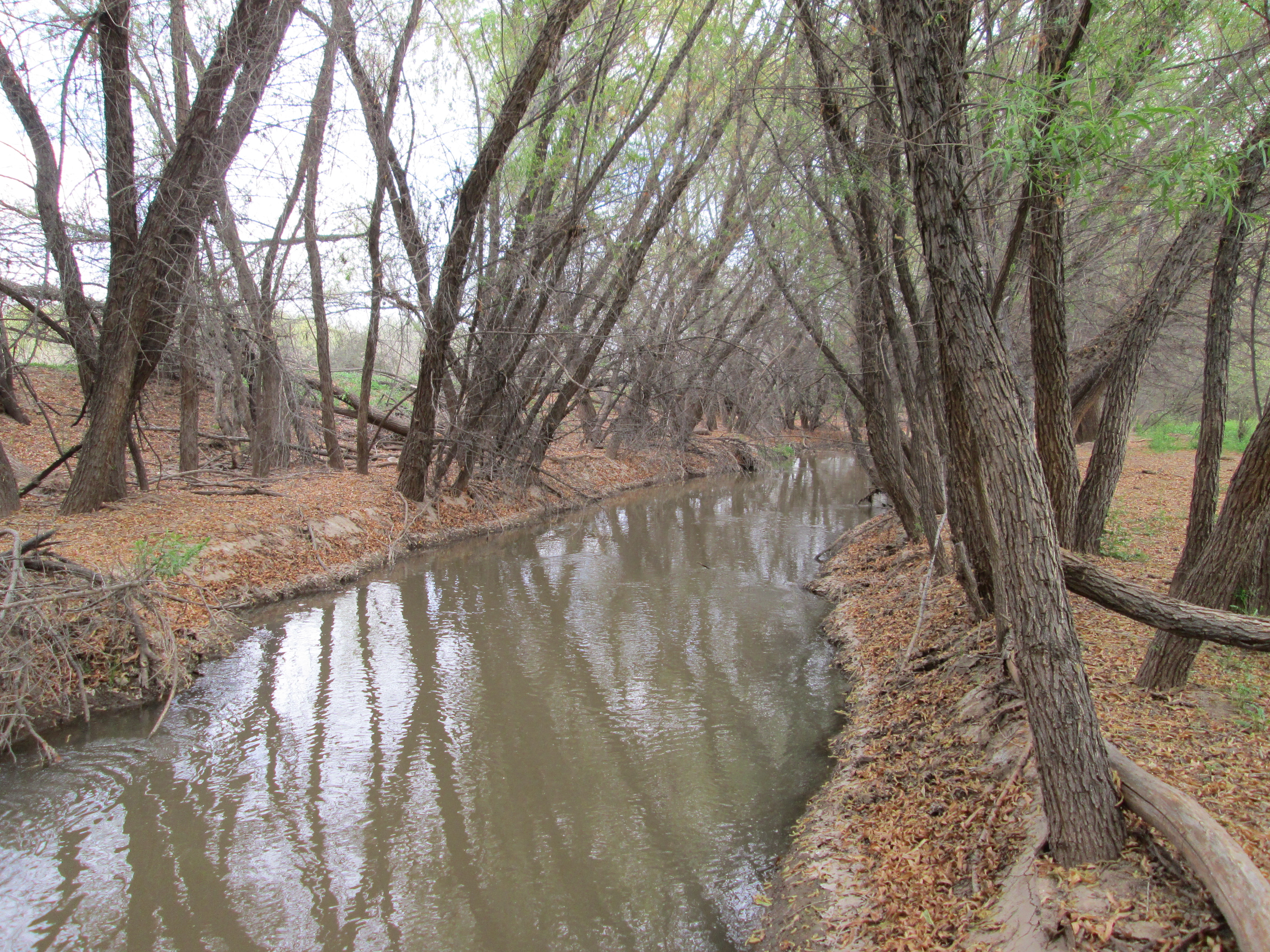
5.10.2019 Santa_Cruz_River

Photo courtesy of University of Arizona Water Resources Research Center

Arizona Department of Water Resources hydrologists have completed an update  to the North Santa Cruz Active Management Area groundwater flow model, the first such updates since the release of modeling reports on the NSCAMA in 2007 and 2010.

The model is updated to include data for the approximately 14-year period beginning in 2002 through water year 2016. The calibrated, extended model will be used to provide model-simulated estimates of natural recharge and discharge components for the draft Fourth Management Plan for the Santa Cruz AMA.

Overall, the NSCAMA model update did not produce any big surprises or changes in the Department’s interpretation of the hydrology in  the area.

However, the groundwater flow model update did reinforce the importance to the NSCAMA aquifer of “episodic flood pulses” — episodes, usually lasting days or weeks, when runoff from large rainfall events flows into the Santa Cruz River and increases the amount of surface flow, often by orders of magnitude.

Water levels in the Santa Cruz AMA are largely dependent on stream recharge, which varies significantly from year to year in response to streamflow coming down the Santa Cruz River. That recharge mostly occurs as a result of those episodic flood pulses generated by substantial rain events.

The North Santa Cruz AMA aquifer is a narrow, shallow basin that provides less long-term storage capacity than wider, deeper aquifers such as that of the Tucson and Phoenix AMAs. Especially following major rain events, water flows through the aquifer quickly because the soil properties are such that the conductivities are very high.

The model update found that groundwater pumping in the southern Tucson AMA is continuing to impact water levels in the northern Santa Cruz AMA north of the town of Tubac.

From 1997 to 2016, water levels in this area have been steadily dropping – up to 45 feet, using 1997-1998 as the baseline.

The northern portion of the Santa Cruz AMA is simulated as a model separate from the southern portion due to the  distinct hydrologic regimes along the upper and lower reaches of the Santa Cruz River within the AMA.

For further information regarding the model update of the North Santa Cruz AMA, contact Sally Stewart Lee at ADWR. sslee@azwater.gov


Soggy Tucson: UA researchers find Old Pueblo gets more monsoon action than anywhere else

california-rainstorm

What happens in Tucson appears to stay in Tucson — at least when the things “happening” in the Old Pueblo are the effects of strong summer thunderstorms.

Tucson and southern Arizona get more Wagnerian excitement –– and suffer more economic harm — from severe “monsoon” storms than any other Southwestern metropolis, according to a pair of researchers from the University of Arizona.

At over 6.08 inches of rain falling during the hot, muggy monsoon season, Tucson leads the Southwestern pack. It gets nearly an inch more than the next soggiest community, El Paso, and easily twice as much as that place north of the Gila River, metro Phoenix.

Like Phoenix, Tucson is an extraordinarily stable environment. It is not in an earthquake zone. Hurricanes rarely make it to southern Arizona intact. And damaging winter weather is a non-starter. There’s a good reason why the local chambers of commerce tout the climate.

Indeed, the report’s authors go out of their way to note that “Tucson’s weather also provides opportunities for economic activity, including a vibrant winter tourism economy and growing solar industry across Southern Arizona.”

And, really, in an environment that in recent years has endured chronic drought, the main effect of summer monsoons is a big attraction. We like water falling in great gobs from the sky.

But something has to top every community’s list of “most damaging” weather effects, even if those effects themselves are comparatively modest.

In Tucson, it’s those often-sensational monsoons, which according to UA researchers Laura A. Bakkensen and Riana D. Johnson account for 84 percent of all “extreme” weather events there and 96 percent of all property losses.

Notably, the Bakkensen/Johnson white paper did not include the net impact of long-term drought.

On the other hand, it did illustrate the most effective ways to mitigate the impacts of those unpredictable monsoons, most of which Southwesterners already “get.”

Like not driving on Interstate 10 between Tucson and Phoenix when it gets dark and windy. Like not pushing the limits of “stupid driver” laws by driving into running washes after summer storms. And, not least, buying a little home and car insurance.