Historically dry winter means Lake Mead may be closer to shortfall than people think

Dry Rockies

LAKE MEAD SHORTFALL AS SOON AS 2019? DON’T WRITE IT OFF

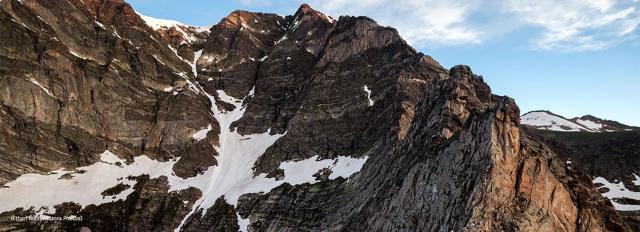
A Q&A WITH THE ADWR DIRECTOR ABOUT POTENTIAL CONSEQUENCES OF AN HISTORICALLY LOW SNOWPACK IN THE ROCKIES

In case you hadn’t noticed, we’ve had some beautiful warm, sunny, dry days of late.

And weeks. And months. The entire Southwest, in fact, has experienced one of the warmest, driest winters on record. For golfing and hiking and living the outdoor lifestyle, that’s great, of course. But, alas, there is an unsettling flip side to all this fair weather.

That dark flip side is the possibility of an unprecedented lack of snowpack runoff in the Colorado River system. Forecasts are calling for a continuation of the dry weather into the fast-approaching spring.

Winter – typically the Southwest’s season for accumulating snowpack in its mountain regions, which provides runoff into reservoirs like Lake Powell and Lake Mead – is nearing its end, regardless what groundhogs in Pennsylvania claim.

Arizona Water News recently sat down with Tom Buschatzke, Director of the Arizona Department of Water Resources, to discuss the consequences of what may be a record-low amount of runoff into the Colorado River system from the 2017-2018 Winter snowpack.

A transcript of that conversation follows:

Arizona Water News: Director Buschatzke, there is a concern that the lack of snowpack in the western Rockies – particularly in the southern sectors of the Rockies – may result in an unregulated runoff into Lake Powell this spring that may be at a record low. How real is that possibility?

Tom Buschatzke: Based on the current snow-water equivalent graphs, regarding that snow-water equivalent in the upper basin of the Colorado River where most of that water is generated is a very real possibility that the snow-water equivalent is tracking lower than 2002, which was the lowest year in recorded history for 100 years of records.

We do know that the runoff is not linear to what the snow-water equivalent is showing, but it is pretty alarming that we are tracking at this point 2002, or actually a little bit below 2002.

AWN: The Bureau of Reclamation has declared that there is almost no chance of a shortfall in water delivered from Lake Mead next year. But is there a chance that those predictions may change as a result of these extremely dry conditions in the Rockies?

TB: Yes, there is certainly a chance that that that prediction, that forecast, may change.

That forecast is based on a release from Lake Powell to Lake Mead of 9 million acre-feet. Normal release is 8.23 million acre-feet. If the unregulated inflow gets to a certain low level, that 9 million acre-feet release won’t occur. You will get 8.23 million acre-feet.

That loss of volume of water (represents) close to 10 feet of elevation in Lake Mead. The Bureau of Reclamation’s current projection — with that 9 million acre-foot release — is about five feet above the shortage trigger, which means that if we get 8.23 (million acre-feet), we could be five feet below the shortage trigger.

If we can’t conserve enough water in Lake Mead to make up the difference, that will be a high bar to achieve between mid-April and the end of July, which would be the time period in which we’d have to do that conservation.

AWN: We’re not the only ones experiencing an abnormally dry winter. California’s snowpack in the Sierra Nevada also is very low right now too. How might that impact California’s stored water in Lake Mead?

TB: If the snowpack in the Sierra Nevada continues to be also very low and the allocations of the State Water Project remain very low, that means southern California is going to get much less water from northern California than it normally does. It also means that they will be looking to make up the difference somehow, and they will be looking probably at the Colorado River to make up that difference.

Potentially, some of that water stored by California – by the Metropolitan Water District (of Southern California), particularly – that is stored in Lake Mead might start coming out of Lake Mead.

There is about 500,000 acre-feet of that water stored. That is over six feet of water under the regulations that control water going in and water going out of Lake Mead. California can take 400,000 acre-feet – or five feet of water (off the top of Lake Mead) – in this calendar year. So, that is a potential that plays into the possibility that the prediction made by Reclamation so far might also change.


AWN: How does the unusually dry winter affect the discussion among the Colorado River states regarding a Drought Contingency Plan? Many Colorado River stakeholders felt that last winter’s higher-than-average snowpack created a so-called “comfort zone” regarding finalizing a DCP. Can they remain comfortable about water in the Colorado now?

TB: So, I think between the states — the state folks who worked on that Drought Contingency Plan – we are in agreement that we need to finalize that Plan.

Some of the individual stakeholders, water-users, etc. that may have believed that there is a “comfort zone,” that we have bought time to further work on the Drought Contingency Plan, I think, need to really address what is happening with the hydrology and the increasing risks of not just the short-term impacts on Lake Mead, but potentially going into a shortage in 2019.

(They need to address the fact that) this bad hydrology also has implications for the future and for the lake falling to those critical elevations that the Drought Contingency Plan was intended to protect.

So, they should not be comfortable about water in the Colorado River. We need to continue to work to finalize the Drought Contingency Plan. And we need to make sure that in Arizona we have the tools in place to make that happen.

AWN: Thank you.

Agenda for annual meeting of Colorado River water users is released

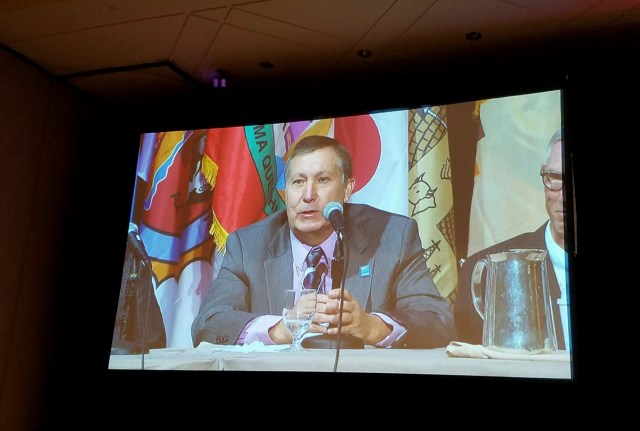
TB at CRWUA 2016

Water Resources Director Buschatzke, speaking during the keynote panel discussion at CRWUA 2016

Editor’s Note: As a service to our readers, the Arizona Department of Water Resources once again is providing a live blog of events as they occur at the Colorado River Water Users Association conferences in Las Vegas, Dec. 12-15.

When they say water is fluid, they’re not kidding. Even convocations assembled to  discuss water policy must remain fluid, especially when those discussions involve Colorado River water policy. Such is the rapidly evolving nature of the complex issues facing Colorado River water users.

Organizers of the Colorado River Water Users Association (CRWUA) annual conference have released the event’s agenda. But even as late as early December, the agenda is identified as “tentative” in order to accommodate potential changes in meeting planning.

Each year, water leaders from the Colorado River system states and the federal Bureau of Reclamation — as well as the system’s major water users, such as cities and agriculture — gather at CRWUA, sharing ideas about management of the most complex water system in the country, the Colorado River.

A focus of discussion among Colorado River states for the last several years has been drought contingency planning to protect and stabilize the river system, particularly Lake Mead, where water levels have drifted dangerously low in recent years.

Discussion about a “DCP,” or Drought Contingency Plan, is certain to play a central role this year as well.

It certainly will be one of the underlying themes of the Keynote Panel Discussion scheduled for Thursday, Dec. 14, entitled “A Ballet in the Making: Choreographing Issues Across the Basin.”

Arizona Department of Water Resources Director Tom Buschatzke will take part in that panel discussion, along with four other top Colorado River water-user executives. The panel will be moderated by Eric Kuhn, general manager of the Colorado River District for the State of Colorado.


PRESS RELEASE: Historic water-conservation pact a “down payment” on Arizona’s effort to protect water levels at Lake Mead

ADWR logo


PRESS RELEASE

FOR IMMEDIATE RELEASE                                                                              CONTACT: Doug MacEachern      

July 13,2017                                                                                                        PHONE: 602.510.0104

 Five partners in plan to store conserved tribal Colorado River water in the great reservoir to ink deal at Friday morning signing ceremony

What: Formal consummation of a five-party agreement for the Gila River Indian Community to conserve a portion of its Colorado River entitlement for the benefit of Lake Mead.

Who: The Gila River Indian Community; the United States of America, through the Bureau of Reclamation; the State of Arizona, through the Department of Water Resources; the City of Phoenix; and, the Walton Family Foundation, Inc.

Where: Arizona Department of Water Resources; 1110 W. Washington St., Third Floor; Hearing Room 3175; Phoenix

When: Friday, July 14; 11 a.m.

The five participants in a historic effort to help stabilize Lake Mead water levels will make their agreement formal at a signing ceremony hosted by the Arizona Department of Water Resources.

As part of the $6 million partnership agreement with the Bureau of Reclamation, the State of Arizona, the City of Phoenix and the Walton Family Foundation, Inc., The Gila River Indian Community will forego delivery of 40,000 acre-feet of its 2017 Colorado River allocation.

The tribe will leave that water in Lake Mead. It will be saved in the Colorado River system rather than be tied to any defined use.

“Today’s agreement and the Community’s ongoing effort to protect the Colorado River carry immense importance for our people and our neighbors across the Southwest. Being good stewards of this most sacred resource is a part of who we are as a people and what the Gila River Indian Community has stood for across time,” said Gila River Indian Community Governor Stephen Roe Lewis.

“The first positive is that this agreement allows the Community to generate income today from water we otherwise would have stored off-reservation to create long-term credits for future marketing. This revenue will help our economy right now, in the present, without sacrificing our future or our water.

“Second, this agreement helps conserve water in Lake Mead. That conservation effort benefits our people and every resident of Arizona by helping to protect the Colorado River and our water future.”

Added Governor Lewis: “Given the central role of water in our economy and our culture, today’s agreement is truly a cause for celebration.”

The five partners effectively view the agreement as a “down payment” on an Arizona-based plan for protecting the great Colorado River-system reservoir, where water levels have been dropping rapidly in recent years as a result of long-running drought and over-allocation.

The Arizona plan – known as the “Drought Contingency Plan Plus” – represents an effort on the part of leaders in the Arizona water community to keep Lake Mead above the first shortage trigger for as long as possible.

“This partnership lays the groundwork for a compensated system-conservation program in the state of Arizona for the benefit of all Colorado River water users,” said Arizona Department of Water Resources Director Tom Buschatzke.

The State of Arizona contributed $2 million to the conservation effort – part of a three-year financial commitment totaling $6 million approved this year by the Legislature and signed by Gov. Doug Ducey.

The City of Phoenix, whose mayor and council approved this agreement on June 13, provided $2 million.

“Smart water policy is essential to our economy and to every Arizonan,” Phoenix Mayor Greg Stanton said.

Added Mayor Stanton: “This historic agreement shows how by thinking creatively and working together we can protect our future Colorado River water supply and safeguard against the continued drought and climate change that are directly impacting Lake Mead.”

The Walton Family Foundation, which believes conservation solutions that make economic sense stand the test of time, contributed $1 million.

“Today’s agreement is about coming together to forge solutions for a sustainable Colorado River that benefit people and the environment,” said Barry Gold, director of the environment program at the Walton Family Foundation.

The federal Bureau of Reclamation also contributed $1 million to this Lake Mead stabilization effort. On January 17 of this year, Reclamation provided $6 million to the Gila River Community for system conservation that resulted in the Community’s first 40,000 acre-feet stored in Lake Mead.

“We are pleased to continue to help our partners in Arizona in their efforts to conserve water in Lake Mead and to implement a Lower Basin Drought Contingency Plan with California and Nevada,” said Terry Fulp, Lower Colorado Regional Director.

An acre-foot is generally considered enough water to cover an acre of land in a foot of water.

For further information, contact Michelle Moreno, Water Resources Public Information Officer, at mamoreno@azwater.gov or Doug MacEachern, Water Resources Communications Administrator at dmaceachern@azwater.gov
 

Feds now see Lake Mead levels sinking 20 feet lower by ‘19 than predicted just last month


Mead

The sensational news about record-setting snowpack in the Sierra Nevada of California and “atmospheric rivers” delivering over 1,000 percent of normal winter rainfall to Big Sur has disguised a much less-than-sensational record of winter moisture elsewhere in the West.

The winter snowpack on the western slopes of the Rockies – the source moisture for the Colorado River – is producing much less runoff than had been anticipated.

As a result, the federal Bureau of Reclamation now is predicting that Colorado River releases from Lake Powell into Lake Mead will be far lower than what the Bureau had anticipated in March of this year.

Indeed, the Bureau now is predicting a huge drop in Lake Mead inflows from those predicted just a month ago.

According to BOR’s June 24-Month Study , projected flows into Lake Mead most likely will result in water levels 20 feet lower on January 1, 2019 than the Bureau had estimated in its 24-Month Study released in May.

The May 24-Month Study prepared by BOR (based on the Colorado River Basin Forecast Center’s water supply forecast) concluded that on January 1, 2019, Lake Mead’s depth likely would be 1,096.77 feet.

Just one month later, the Bureau now is projecting Lake Mead’s surface level on that date at 1,076.53 feet, literally inches above the level that would trigger automatic delivery cutbacks, mostly to central Arizona’s allotment of Colorado River water.

The dramatic turn-around in anticipated water flow into Lake Mead is a direct result of disappointing expectations for water flow into Lake Powell upstream. Powell’s diminished inflows are due to a dry early spring and consistently warmer-than-average temperatures in the Rocky Mountain region through the spring.

The sudden drop-off of moisture in the wake of an extremely wet January and February was “the big game-changer,” said Jeff Inwood of the Arizona Department of Water Resources’ Colorado River Team.

“The spring snows stopped and it got warmer faster, so lots of the snowpack melted off.”

The severe drop-off in anticipated flows into Lake Mead represents a shocking turn-around in expectations for the near-term health of the great reservoir.

Scarcely more than a month ago, most water analysts were breathing a sigh of relief in the wake of years of drought and diminished Rocky Mountain snowpack.

Improved moisture levels this past winter, they believed, had pushed back a Day of Reckoning for Lake Mead. Better-than-average winter snows would prompt water releases from Lake Powell that would raise Mead levels above critical stages.

The anticipation of relief was so palpable, in fact, that some Arizona water users and managers began to believe that the state would have more time to deal with the “Drought Contingency Plan – Plus,” the intra-Arizona plan that, once approved, would spread water-delivery cuts among a wider swath of Arizona water users.

In fact, as recently as March, some analysts were talking openly of a possible “equalization” release this year from Lake Powell to Lake Mead – a comparatively enormous release of water, perhaps of more than 11 million acre-feet. John Fleck, the Water Resources Program director at the University of New Mexico, calculated in mid-March that if the heavy winter moisture held, Lake Mead “would rise 27 feet this year.” 

Fleck added that “it probably won’t” hold. And he was right. The June 2017 24-Month Study results have made that prediction official: the big 2017 water balloon now appears to have burst.

Modeling conducted by the Bureau in addition to the 24-Month Study in April indicated that there remained a 45% probability of Lake Powell operating in the Equalization Tier with a release from Lake Powell of greater than 8.23 MAF in 2018.

In March, water analysts were predicting a very healthy 10.4 million acre-feet inflow into Lake Powell off the Rocky Mountain watershed during the critical April-July runoff season.

Now? Updated June statistics indicate inflows to Lake Powell of just 8.3 million acre-feet, a drop-off of over 2 million acre-feet — more than the entire annual delivery of the Central Arizona Project’s allotment for its Maricopa, Pinal and Pima County customers.

“We’ve seen this before,” said Water Resources Director Tom Buschatzke, noting that some of the region’s driest winter seasons started out with hope-inspiring bursts of moisture. “We saw it as recently as 2012 and 2013.”

“Recent scientific studies have been predicting this would be more of what we could expect to see in the future,” Buschatzke said.

The diminished expectations of water flowing into Lake Powell directly impact expectations for the health of Lake Mead in the coming years.

The Bureau of Reclamation’s data analysis indicate that on January 1, 2018 – the period during which heavy Lake Powell releases were expected to give Colorado River water officials a “breather” – Lake Mead’s water level likely will be at just 1,080.49 feet, barely more than five feet above the shortage trigger of 1,075 feet.

The primary driver of those lower lake levels is the diminishing amount of water to be released from Lake Powell – down from an anticipated “equalization release” of 10.8 million acre-feet during Water Year 2018, as reported in May, to a “balancing release” of just 9.0 million acre-feet, as reported by the Bureau in June.

Panel recommends Arizona drought declaration continue for umpteenth year

Banner from Slide

It is, indisputably, the best weather show in Arizona all year.

Nothing against the fine work of Arizona’s TV weather forecasters and meteorologists, but the best two hours of weather analysis, climate analysis, near-term predictions, long-term predictions, precipitation, Colorado River flows and the various impacts of all of it is the report of the Governor’s Drought Interagency Coordinating Group.

On Tuesday, the panel of water-weather-climate-watershed experts concluded Arizona remains in a state of drought.

As they have consistently since 1999, the coordinating group’s members voted to make an official recommendation that a letter be sent to the Arizona Governor alerting him to that fact.

The recommendation will serve as the basis for an official drought declaration from Gov. Doug Ducey.

“Our outlook has improved and there have been a lot of proactive efforts to mitigate our (water) risks,” said Wendy Smith-Reeve of the Arizona Division of Emergency Management. Together with Arizona Department of Water Resources Director Tom Buschatzke, Smith-Reeve co-chairs the coordinating group.

“(But) while our short-term outlook is positive, long-term recommends we continue with a drought declaration,” she said. “This is not the time to stop pressing forward.”

Preceding that decision was some of the clearest and most precise weather-climate analysis provided anywhere in the state.

State Climatologist Nancy Selover and Mark O’Malley of the National Weather Service provided a near-term retrospective and near-term prediction, respectively, on the state’s weather.

Arizona State Climatologist Nancy Selover

A thumbnail: weather in the recent past has been a little wetter; weather in the near future, meanwhile, looks at least 50-50 to stay that way.

“Our monsoon picked up a lot of good activity, but for the short-term it still has been a little dry in the southern part of the state,” said Selover, analyzing the 2016 summer storm season.

Regarding the approaching summer monsoon season, O’Malley explained that the intensity of the rainy season will be determined by the “persistence” of a subtropical high-pressure system.

“If the high (pressure system) moves to the north (of Arizona), we get the moisture,” he said.

O’Malley said there is a “50-50” chance that conditions this summer will be ripe for the advent of a so-called “El Nino” weather pattern, which enhances the prospects of moisture in Arizona.

“Same for the (2017-18) winter,” he added.

As for air temperatures this coming summer, stow the sweaters: “It’s very favorable that we’ll be warmer than average,” he said.

Conditions at Lake Mead and on the Colorado River, meanwhile, are moderately improved from last year, continuing the trend of positive effects arising from the strong, early-winter snowstorms in the western Rocky Mountains, said Jeff Inwood of the Department of Water Resources.

Mark O’Malley of the National Weather Service

A warmer, “less wet” spring, however, kept the snowpack from fueling a banner-year runoff into the Colorado River system, said Inwood. Nevertheless, the good (if not quite ‘great’) news is that Lake Mead water levels stand now at about ten feet higher than at this time last year.

Inwood’s report, of course, directly impacts the on-going drama surrounding the chances that Lake Mead may descend to a depth that would trigger a water-delivery shortage declaration for Colorado River water users.

“As a result of the improved hydrologies, we are seeing decreased probabilities of a shortage,” said Inwood.

The report on Colorado River conditions dovetailed with the next presentation, a report on progress toward a drought contingency plan – including both inter- and intra-state agreements – by Water Resources Director Buschatzke.

Buschatzke, too, observed that “we’re in good shape going forward,” but reminded the audience that the chronic structural imbalance in Lake Mead remains. About 1.2 million acre-feet more water is extracted from the reservoir each year than on average flows into it.

Arizona Department of Water Resources Director Tom Buschatzke

Buschatzke updated the coordinating group on the progress of drought contingency planning negotiations.

The Water Resources director also reported that the Fiscal Year 2018 state budget recently passed by the Arizona Legislature included $2 million for each of the next three years for funding conservation efforts in Lake Mead.

Charlie Ester of Salt River Project reported that Arizona’s mountains enjoyed a wetter-than-average winter season, too. But not a record-breaker.

By mid-winter, SRP was crossing its fingers for a snowpack that might fill its premier reservoir, Roosevelt Lake. A dry April and snowfall that “didn’t slide” into the White Mountains — the main watershed for Roosevelt Lake – kept the big reservoir at just 76 percent of capacity, he said.

Still, inflow into Roosevelt wasn’t shabby: Prior to the winter snows, Roosevelt had dropped to just 44 percent of capacity. 

Charlie Ester, Salt River Project

The snowpack in Arizona’s Ponderosa pine country, meanwhile, was good enough to make the state’s approaching fire season “manageable,” said Jeff Whitney of the Arizona Department of Forestry and Fire Management.

In the forests, said Whitney, “we’re looking at a ‘normal’ year.”

“It’s not out of the realm of probability that we could have an upper-elevation fire,” he said. “But I see it being manageable.”

The real challenge, he said, would be in lower-elevation grasslands, which feasted on winter rains and now present a serious fire danger. Whitney noted the southern Arizona Sawmill Fire, which consumed 47,000 acres of mostly grasslands, as well as the smaller Mulberry Fire.

Thanks to the prospects of an earlier-than-average monsoon season, he said, “we are guardedly optimistic – with the caveat that we will have an elevated amount of lightning.”

At that, the co-chairs recommended – and the coordinating group unanimously supported – a recommendation of another drought declaration to be sent to the governor.

Real people, affected by real-world water policy, gather to talk about dealing with it

WFP 2

Western Farm Press, May 7, 2017

The talk about stabilizing Lake Mead and resolving chronic over-allocation of the Colorado River system tends to dwell at the 30,000-foot level.

It’s all about how cutbacks might affect the states. It’s about law and policy. About the consequences of inaction for millions of people and for industries, like agriculture, valued in the billions of dollars.

At some point, though, someone has to think retail. Someone has to contemplate the real-world, on-the-ground impact of what happens at the end of the irrigation canal for the end-user of Colorado River water that may no longer be flowing in quite the volumes that it used to flow.

Unsurprisingly, there are such people contemplating the consequences of the anticipated multi-state “drought contingency plan,” which at some point might result in cuts to Arizona’s allocation by hundreds of thousands of acre-feet of Colorado River water.

About 350 of them – mostly Arizona farmers and ranchers – recently attended the 2017 Irrigated Agriculture Conference, a one-day event in Tucson that this year included 33 speakers analyzing the kind of water-wise management practices that will work best when and/or if a shortfall is declared on the Colorado River system.

Speakers and attendees shared views on water-conservation strategies and water-wise cropping systems. Arnott Duncan of Duncan Family Farms, for example, told attendees how his irrigation system is specifically designed for the organic-vegetable crops he grows.

Speakers weighed the relative importance of balancing lower water-use crops with higher value crops to get the most bang for their farming buck.

The Western Farm Press story on the event can be found here.

A word about Western Farm Press: More than a mere niche publication, WFP has almost 19,000 subscribers and gets annual page-view counts approaching two million. The linked story above is typical of WFP: it reports on and analyzes farming issues from the point of view of the local farmer. It’s not just an “industry” publication. It’s a “how industry issues affect real people” publication.

A water drop’s journey: A Las Vegas newspaper produces a splendid, little video on how a desert city’s water gets where it needs to be

screenshot

Just what does it take to quench the thirst of two million people living in the middle of a desert?

Especially in these drought years, news media have become adept at telling us what it takes to deliver water to communities — what it takes to quench the thirst of desert-dwellers and others in the Southwest.

The Las Vegas Review Journal recently did a marvelous job of showing readers — rather than merely telling them — precisely what it takes for a drop of water to exit Lake Mead (Sin City’s primary water resource) and travel to a residential water faucet.

Produced by Rachel Aston of the Review-Journal, the video starts with that basic question — “What does it take to quench the thirst of two million people” living in the middle of a desert? — and escorts viewers on that journey.

(For traditionalists, Review-Journal reporter Henry Brean provided a story about the water-journey, too)

The water-journey video starts in Lake Mead (actually, the video includes a shot or two of the Colorado River, too) and moves with the water through the 20-foot-tall, 3,000- and 4,600-horsepower pumps that draw the water to one of the city’s two treatment facilities. It depicts the cleansing and filtration systems, as well as the various means by which the water is delivered to homes and businesses. And, we assume, casinos.

The video is just a little over two minutes long, but it depicts all of the essential infrastructural elements of water delivery that everyone should understand, but in fact a very few number of us actually do.

NPR’s interview with Colorado River author misses an important angle: The effort to save Lake Mead

Where the Water Goes by David Owen

National Public Radio has some of the best interviewing talent in American journalism, and there’s none better than Terry Gross, whose Peabody Award-winning weekday program, “Fresh Air,” has consistently delivered provocative and fascinating interview sessions. On radio, there’s really none better.

But, let’s face it Westerners, the perspective of much of NPR’s programming is often East Coast-centric. Gross’s interview on Thursday with the author of a new book on the Colorado River is further evidence that if they don’t know about it in New York… well, it just isn’t.

Where the Water Goes: Life and Death Along the Colorado River (Penguin Group USA) by David Owen by and large is an honest and fair assessment of the challenges facing the Colorado River today — a source of water for over 35 million people living in the American Southwest. Especially in the face of long-term, chronic drought, those challenges have been daunting. Owen chronicles most of them in Where the Water Goes, including the tender status of Lake Mead, the largest reservoir on the Colorado River system, which today is less than 40 percent full.

In his NPR interview with Gross, Owen explained the 1922 agreement among the federal government and the Colorado River states to apportion shares of the river’s water. The long-standing agreement, as it has turned out, is one of the biggest reasons why Lake Mead is in danger of descending now to “deadpool” level, the critical point at which water may no longer flow out of the lake. Said Owen:

“It’s one of these great sort of ironies of history that in the 19 – the 1920s were some of the wettest years in that part of the country since the 1400s. So the river at that time was carrying more water than ever. And so when the states divided up the river, they were dividing up – actually water that didn’t exist. On the other side, the good side is that, well, it’s almost a century later and that compact, the agreement among those states, still exists.”

Owen’s assessment is pretty much spot on… as far as it goes. But what he leaves out in his interview with Gross is some vital perspective: Fixing that structural deficit created in 1922 is the consuming issue facing Colorado River water managers today.

It’s not like they’re all slapping their foreheads, going, “Oh, that’s why we’re in this mess!”

Addressing the structural deficit is one of the highest priorities of the “Drought Contingency Plan,” or DCP, that the river states and the federal government have been negotiating for nearly three years. See: here, here, here, here, here, here, here, here, here and…(whew!) here.

We appreciate Owen and Terry Gross educating NPR’s mostly waterlogged, mostly Eastern audience about the challenges facing the much more arid West. Just because California and much of the West has gotten drenched of late doesn’t mean pursuing a DCP is any less of a priority.

There really is another important chapter to that story about where the water goes. It’s about the effort to keep a lot of it in Lake Mead.


“Fill Mead First” plan to drain Lake Powell has sprung some big leaks, a new assessment finds

Utah State University analysis of proposal finds water savings would be slight and ecological hazards plentiful

lake-mead-viewed-from-arizona

Whether we are talking about draining all of its water or just most of it, reducing  Lake Powell to a secondary status behind Lake Mead would fail in two of the plan’s most important goals, according to a technical assessment released last fall by Utah State University researchers.

One of the primary conclusions of the so-called “Fill Mead First” proposal was that water loss, through evaporation and through reservoir bank storage and seepage into the bedrock below Lake Powell, would be greatly diminished by storing water primarily in Lake Mead.

“Fill Mead First” was developed by the Glen Canyon Institute of Salt Lake City, and enjoys strong backing from environmental groups advocating that the Glen Canyon Dam be decommissioned.

The Utah State assessment, however, found that estimates of water saved from evaporation by effectively combining the two great Colorado River reservoirs were too inaccurate – and data too old – to use them for rendering a sound scientific judgment.

The analysis led by Jack Schmidt, director of Utah State’s Center for Colorado River Studies, found considerable “state of the science” data regarding evaporation at Lake Mead. The work had been performed by the U.S. Geological Survey.

But at Powell, no such research has been conducted since the mid-1970s. What’s more, the USU assessment learned that no studies of water seeping into the relatively porous Navajo sandstone bedrock of Lake Powell had been conducted since the mid-1980s.

Conducting their own research, the Utah State analysts concluded while there may be a slight decrease in evaporation loss by combining the two reservoirs in Lake Mead, the uncertainty of those conclusions appeared too high to base such a huge infrastructure choice – draining Lake Powell – on them.

The Fill Mead First study assumed that reservoir bank storage would remain constant for their analysis period.  The Utah State researchers, however, estimated the bank storage rates have decreased since Lake Powell was completed and therefore the savings would not be significant.  Water in bank storage can return to the reservoir as its elevation drops.

Seepage losses into the Lake Powell bedrock, meanwhile, likely are ten percent of what Fill Mead First advocates claim.  The USU study noted that some of the seepage water returns to the Colorado River above Lee’s Ferry.

Schmidt told Phys.org science-news magazine that it would be best to wait for a better system of data collection and analysis before making any major decisions about the future of Lake Powell.

“The Fill Mead First plan has encouraged us to think broadly about how and where we store water in the Colorado River system,” said Schmidt.

“But the magnitude of potential ecosystem changes caused by the FMF plan are so great and the water savings are so uncertain that implementation should await a new program of data collection and analysis designed to reduce uncertainty about the key process of evaporation and bank seepage.”

Utah State’s findings regarding the ecological consequences of lowering or draining Lake Powell appear even more significant than uncertainty about water losses.

The Fill Mead First proposal would have little effect in its initial phases on the amount of fine-grain sediment released into the Colorado River below Glen Canyon Dam. The plan’s final phase, on the other hand, would “cause significant ecosystem adjustments associated with the sudden change from relatively clear water to a very turbid river.”

The assessment concluded that unless Glen Canyon Dam was bypassed completely, it would be impossible to provide the supply of sand needed to reconstitute the eddy sandbars and camping beaches that today are an important part of the river’s ecosystem throughout the Grand Canyon.

The assessment found that impacts to the river’s aquatic and riparian ecosystem – including the existing population of endangered native species such as the humpback chub – could be “potentially significant.”

Editor’s note: Arizona Water News published a two-part series that began September 29 arguing that the effort to decommission Glen Canyon Dam was ill-advised. That series can be found here. And here.